Someone Else Someday
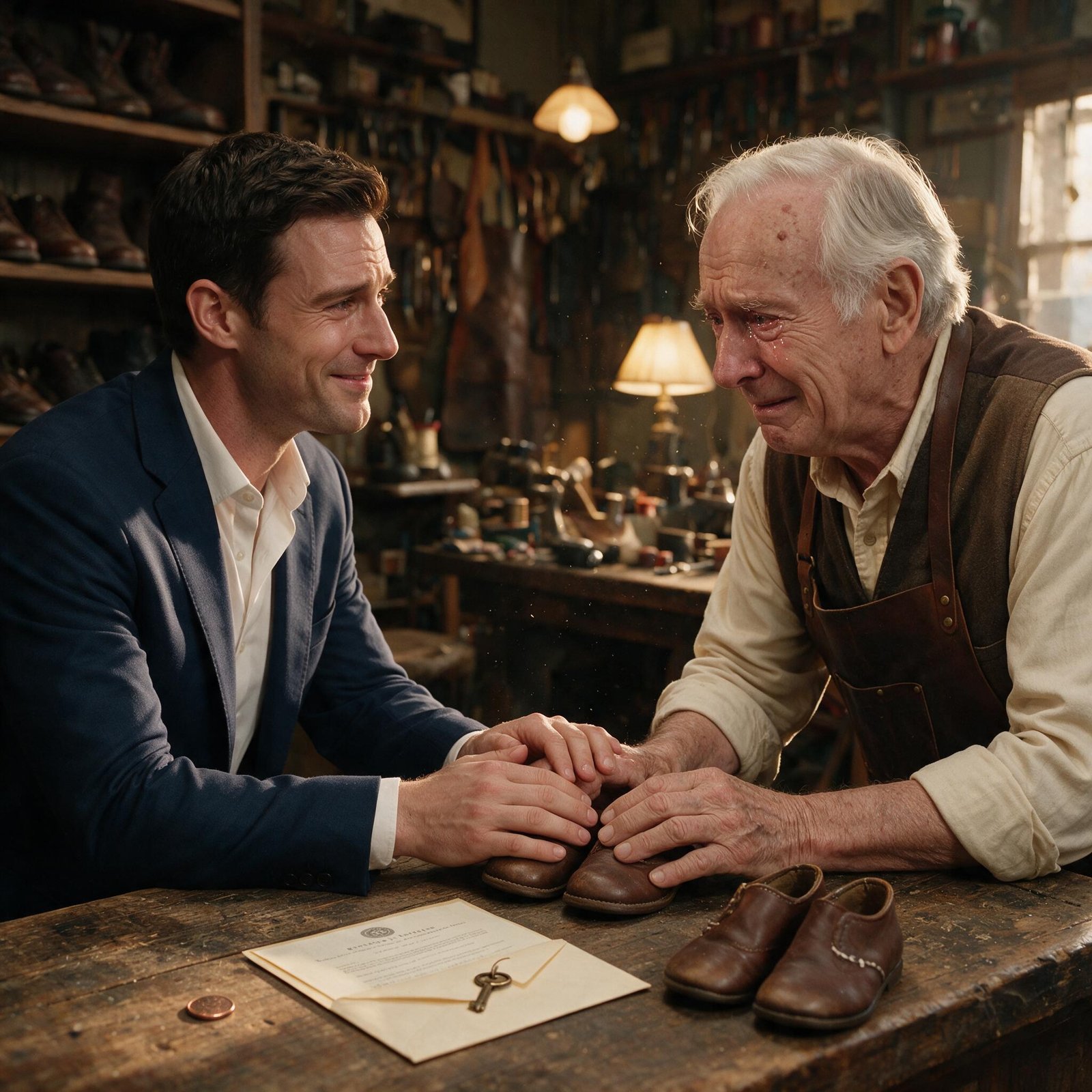
The document came to rest on Daniel's side of the counter while the building key remained between the two men.
Daniel looked at the deed, then at Sam, unable to fit the refusal into the reunion he had rehearsed for years.
“The property carries no debt, and there are no conditions attached.”
Sam kept one hand beside the key but did not take it.
“I believe you.”
“Then why are you giving it back?”
Sam turned the copper penny once beneath his fingertip.
“Because you came here believing this settles an account.”
He opened the signed transfer document to the clause granting Sam ownership without a lien, condition, or retained right.
Daniel had paid the former owner the appraised market price in an ordinary transaction that never threatened Sam's lease.
“This is not a trap, Sam.”
“A clean gift can still carry a mistaken idea.”
Daniel's gaze moved to the little shoes on the counter.
The shoes had let him walk into school without split leather scraping his heel, but they had not completed his homework, earned his first route assignment, or corrected the costly mistakes he made in his early working years.
Daniel worked warehouse and route jobs while teachers, supervisors, and patient drivers helped him learn.
He built a regional logistics company from one borrowed van, corrected costly estimates, repaired customer relationships, and expanded only when the work supported another vehicle.
He had trained new drivers, given struggling customers more time, and covered emergency deliveries without charge, but he had never counted those choices as fulfilling Sam's request.
Still, every milestone had brought back the image of Sam lowering himself to the floor to tie a stranger's shoes.
“I spent twenty years trying to become someone who could repay you.”
Sam's expression softened without yielding.
“That boy never owed me twenty years.”
In Daniel's mind, success had converted the penny into a sum large enough to cancel shame.
“You asked me to help another person someday.”
“Yes.”
“I thought taking away your rent would count.”
Sam owned the business, tools, stock, and goodwill, but monthly rent limited what he could reserve for slower seasons.
Owning the property would bring genuine security, and he was too honest to pretend otherwise.
“It is generous, and it could change my life.”
“But it is not enough.”
“Enough is the wrong question.”
Sam placed the deed squarely in front of Daniel and tapped its edge.
“You returned kindness to the place it came from, but the promise pointed away from me.”
The distinction settled over Daniel with more weight than rejection.
He had found the man who helped him, presented a grand answer, and assumed the size of the answer proved he had understood the lesson.
“What do you want me to do?”
“First, let my own lawyer read every page.”
Daniel nodded and moved the key beside the deed so both remained clearly on his side of the counter.
“She can call my attorneys directly, and I will pay her fee without choosing her or limiting her review.”
“Second, separate this building from whatever your company hopes to announce.”
His communications team had prepared a press story, a brass plaque bearing the company name, and photographs showing what one compassionate sale could become.
His draft campaign plan also claimed approval over how the shop described any future program.
None of those plans appeared in the deed, yet he understood that legal freedom and social pressure were not the same thing.
“I can cancel all of it.”
“Cancel it because no one here owes you a picture, a name, or a grateful ending.”
For years he had imagined honoring Sam by showing the world what happened in the shop, without considering that the original kindness had been powerful precisely because it left Daniel's humiliation private.
Sam picked up the penny and returned it to the wooden cash box, where it landed with a quiet click among ordinary coins.
“If the deed is clean and the gift stays quiet, will you accept it?”
“I will consider accepting the building.”
Daniel heard the boundary in the careful phrasing and resisted the urge to negotiate around it.
He took out his phone, messaged his communications team, canceled the campaign, and placed the dark screen facedown on the counter.
“The building stays separate, your lawyer gets every page, and my company gets no name, approval, photographs, or story.”
Sam rested both hands on the worn counter and studied Daniel for a long moment, watching for resistance or performance.
“Then we can discuss the deed after the review.”
Daniel looked toward the lower-left shelf where the brown shoes had waited twenty years earlier.
He finally understood that his gratitude had traveled in a circle and stopped at its starting point, even though kindness had appeared throughout the rest of his life.
“What do I do with the promise?”
Sam opened the wooden cash box and touched Daniel's copper penny without removing it.
“Bring me the next penny.”