The Mark on the Bulbs
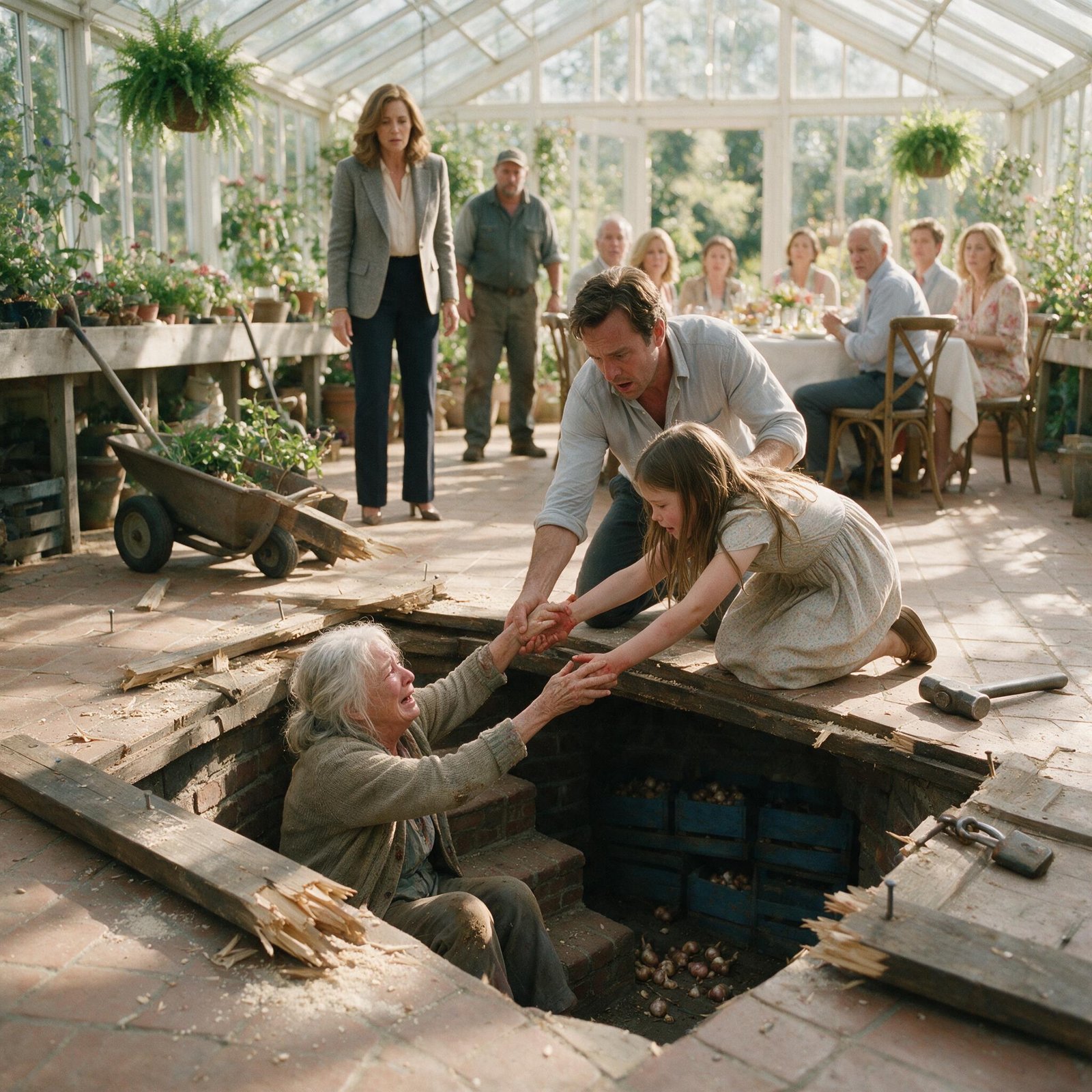
Two days after the rescue, Mark entered the conservatory expecting the broken hatch to command his attention, but the rows of blue crates below it drew his eyes first.
Dr. Naomi Bell stood beside a waist-high inspection table while Rosa carried one crate at a time up the three cellar steps.
Lily spent the morning with her great-aunt in the house, away from the broken hatch and the examination table.
For each sample group, Dr. Bell used fresh gloves, clean tools, and a new shallow tray, while loose soil stayed contained with the bulbs it came from.
The first group from the nearest blue crate showed softened bases, discolored roots, and fine pale growth inside several scales.
In a group from the rear wall, one bulb hid a sunken section beneath sound outer skin while another had brittle roots and a dark basal mark.
“These signs justify treating the stock as suspect, but they do not identify a cause or show how anything might spread,” she said.
The collection could not be called clean simply because some bulbs still appeared healthy.
Nothing in the review supported a claim of danger to people, so Dr. Bell kept her caution focused on the bulbs, soil, tools, and their uncertain condition.
Mark felt ashamed that Diane's confident warning had sounded scientific to him when it had been only useful.
As a boy, Mark had measured each spring by the first Calder bloom opening above his mother's hands.
He had assumed those flowers survived because tradition was naturally durable, not because Evelyn made cautious choices no guest ever applauded.
At brunch, Diane had offered him the easier version, in which displaying the crates proved the family could carry its past forward without delay or doubt.
He understood now why her warning had caught him: it made obedience feel like loyalty.
Rosa said he had found the first two damaged bulbs while selecting stock for Diane's display near the central glass doors.
He showed them to Evelyn and Diane together, and Evelyn isolated the entire collection pending independent review.
Diane ordered Rosa to load the clean-looking crates anyway, but he refused because Evelyn owned the stock and had not withdrawn her instruction.
Diane had accused him of embarrassing the family over ordinary rot.
When Rosa left to set clean tools outside, every blue crate stood against the brick wall, but by the time relatives arrived, one sat near the steps on the short loading path.
The single pale drag mark ended beneath the crate Evelyn had moved near the steps.
Rosa would not guess whether Diane had intended to move it farther, and Mark did not ask him to.
Mark studied the drag mark without turning it into a route it could not prove.
It showed only that Evelyn had shifted the crate near the steps and that Diane had already wanted the stock moving.
He had spent years rewarding Diane for supplying answers quickly, while his mother and Rosa had stopped precisely because they did not have one.
The broken cross-bars added only the timing of what happened next.
Their lumber was dry and newly cut, the nail heads were bright, and fresh dust still clung to the upper face of the hatch around metal darkened by years of rust.
Rosa recognized the boards as spare repair pieces stored near the potting bench that morning, not as part of an old sealed cellar.
The fresh marks fixed the barricade to that morning, while Rosa's refusal before brunch and conduct at the hatch matched a sequence in which Diane acted alone.
By noon, repeated signs in samples from four blue crates had widened Dr. Bell's concern without identifying a cause.
She advised leaving every crate together and untouched while Evelyn weighed continued containment and further assessment.
Mark wanted to ask which bulbs could be saved, yet his mother's stillness warned him that the question had become larger than a few damaged roots.
These lilies had outlived the people who planted them, and he had treated their survival as something the family was owed.
Evelyn had taught him that stewardship was work, but Diane had taught him overnight how easily that word could become possession.
Dr. Bell removed her gloves and faced Evelyn rather than the relatives gathered beyond the rope.
“Until you make an informed containment decision, no crate can move from this conservatory,” she said.
Evelyn looked past the opened trays toward the entire wall of blue crates, and Mark understood that she was no longer deciding what the sale could keep.
Part 4 of 5 · The Girl Who Tore Open Grandma's Cellar