The Owner Override
By noon the next day, Lucy could feel her fingers again, but warmth had done nothing for the shame waiting beneath her hospital blanket.
The emergency physician had called it cold stress with mild hypothermia and found no injury that required surgery or an overnight admission.
Red bands circled Lucy's wrists where Diane had fastened her to the freezer rack.
Lucy kept those marks covered when Mark entered the consultation room with labor advocate Nora Patel and Detective Lena Ruiz.
Nora placed an empty notebook on the table and explained that the wage investigation had begun before Lucy returned to town.
Six former employees of Hearth & Vine had supplied pay stubs, time-clock slips, posted schedules, tip statements, and bank records showing deposits smaller than the amounts reported to them.
The payroll provider had preserved its own access history under an ordinary records-retention policy.
“I need to explain why my name is on those payroll batches,” Lucy said.
Three years earlier, Lucy had accepted the office-manager position at Hearth & Vine because its daytime schedule fit the custody arrangement she shared with Mark.
She and Mark had already separated then, and their divorce became final twenty-six months before the freezer door opened.
Employees clocked in through a wall terminal, and Lucy used those approved hours to prepare each payroll batch.
Only Diane's owner account could alter time after Lucy submitted it.
Twelve minutes disappeared from one dishwasher's closing shift, then twenty-six from a server's cleanup, then an entire hour of overtime from a line cook who had worked through a private event.
Diane also created a “house appreciation” deduction that quietly moved part of the card-tip pool into the restaurant's operating account.
Lucy questioned the first deduction and refused to approve the second.
Diane made the changes anyway, printed reports identifying Lucy as the payroll processor, and told her that processors answered for missing money.
“She said the police would see my name before they ever saw hers,” Lucy said.
When Lucy tried to tell Mark that Diane was stealing wages, he treated it as an accusation against the woman he was dating and asked whether their personal history had followed Lucy into the restaurant.
Diane then showed her a payroll summary bearing Lucy's name and threatened to accuse her of diverting the missing tips.
Lucy believed the threat because she was exhausted, frightened, and ashamed that she had processed earlier batches without noticing the alterations.
She packed one bag, bought a bus ticket with her own debit card, and sent Mark one genuine message.
The message said Jack was safer with him and that Lucy needed time, and Lucy had written it herself.
For almost four months, Lucy worked temporary bookkeeping jobs two states away and told herself she would call Jack after she understood how to defend herself.
Fear explained why she left, but it did not turn seven months of silence into something done to her.
“I abandoned my responsibility to him,” Lucy said.
Mark looked down at his hands and said, “I believed the version that asked the least of me.”
During the fifth month, former lead server Tessa Morales reached Lucy through an old personal email address and said several employees were preparing wage claims.
Nora helped Lucy contact the labor agency, which obtained records directly from workers, the payroll provider, and the restaurant's bank.
Diane had promised to sign corrected payroll statements and surrender copies of the tip records before the agency's formal review.
Lucy told Nora where she was going and agreed to check in within thirty minutes.
Inside the restaurant office, Diane instead placed a prepared declaration on the desk and ordered Lucy to accept responsibility for every missing dollar.
Lucy refused and said the agency already possessed records Diane could not destroy.
When Diane blocked the office door, Lucy reached the restaurant landline and called the only number she could remember without her phone.
Jack answered.
Lucy managed to say Jack's name before Diane tore the receiver away and the metal office door slammed against the wall, leaving the restaurant's caller ID as the only indication of her location.
The struggle that followed lasted less than a minute.
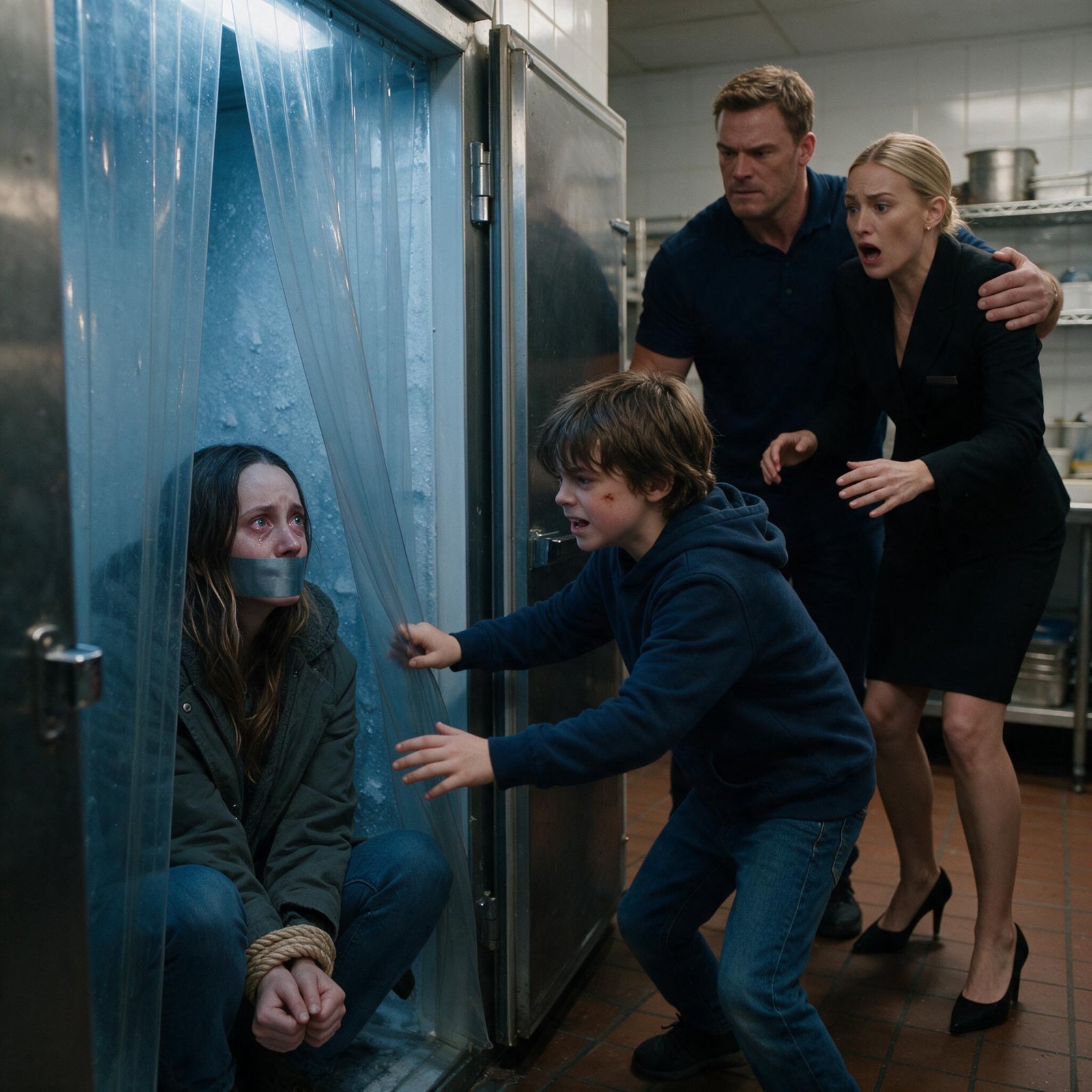
Diane forced Lucy into the kitchen, fastened her wrists to a low freezer rack, covered her mouth, wrapped a coat around her, and locked the recently installed exterior hasp.
Lucy had been inside for approximately eighteen minutes when Jack broke the padlock.
Nora turned a written update from the labor agency toward Lucy and said, “The payroll provider has authenticated the access history.”
Relief did not feel like forgiveness, but it gave Lucy the first fact solid enough to stand beside.
Every altered payroll, including the ones issued months after Lucy left, carried Diane's owner-only code.
Part 3 of 5 · The Boy Who Destroyed His Stepmother's Restaurant